Flooring Considerations on Tighter Budgets
All of us are feeling it – it costs more to do, well, everything. And yet, we still need to maintain our homes. Avoiding repairs and improvements only compounds the issues (and costs) down the road. If flooring is on “the list”, I have some ideas for you to consider. I will warn you: I’m a practical person, who lives on a budget, and believes in smart choices – I write from this perspective.
- If you can, use what you have: Many of us are in the habit of replacing whatever is worn or we don’t like anymore. With the press of a button, Amazon may even be able to deliver it today! While this concept may be ok for the small items, floors are too large of an item (physically and monetarily) and impactful on our daily lives to be wasteful. It shocks me every time I hear that someone is considering covering their worn hardwood floors with LVP just because they want “new” or “can do it themselves”. If your wood floors are not too thin, have them professionally refinished. It may save you money now and be the smarter choice for the value of your home.
- Understand what adds value to your home: In Utah, hardwood floors are the only flooring material that increases the value of your home. Before you just agree and move on, I would like you to consider this further. While most of us understand the value differences of different materials (such as the limitations of engineered wood making them less of a value add than solid hardwood), have you stopped to consider that one solid hardwood floor does not add more value than another solid hardwood floor? Tearing out perfectly good but narrow plank wood floors and replacing them with wide plank wood floors does not add value to your home. Similarly, if you are adding wood floors to your home, you don’t get more value for the more expensive wood. A narrower plank or more character grade of wood may help you to achieve the overall objectives within a more friendly budget.
- Learn what influences the costs of the product options you are considering (also known as: What was cheaper then may not be cheaper now): Raw material costs influenced by wars, tariffs, and freight and transport costs escalating with fuel prices are all influencing material costs in the flooring industry right now. Don’t automatically rule out options because you guess that they would be more expensive. Domestically grown and milled wood floors, particularly in a narrower plank, are incredibly affordable right now. We have provided estimates for solid wood flooring to clients recently that have been comparable in cost to other imported material options, but with the value add to the home.
Please let us know if you would like to explore options.
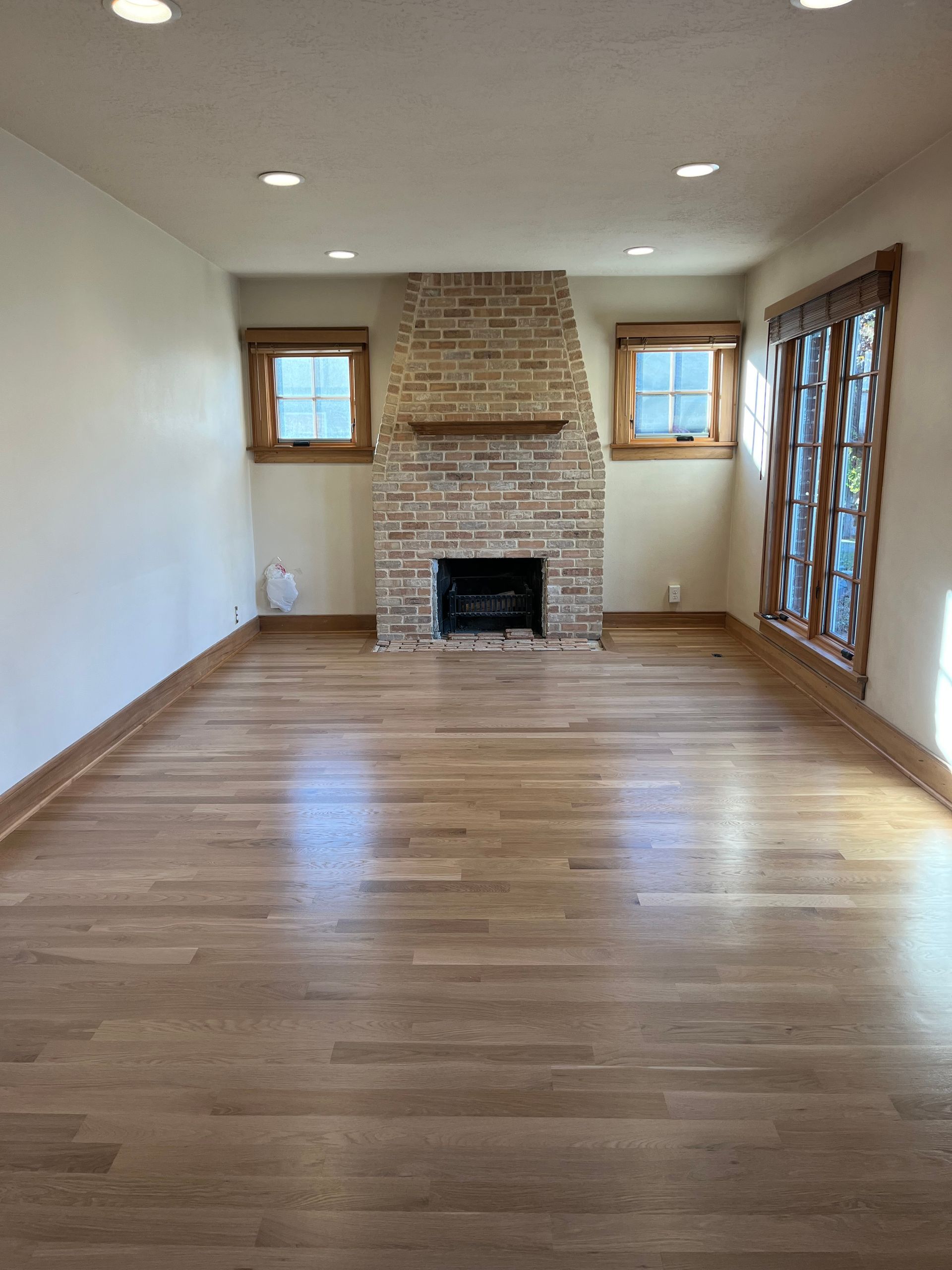
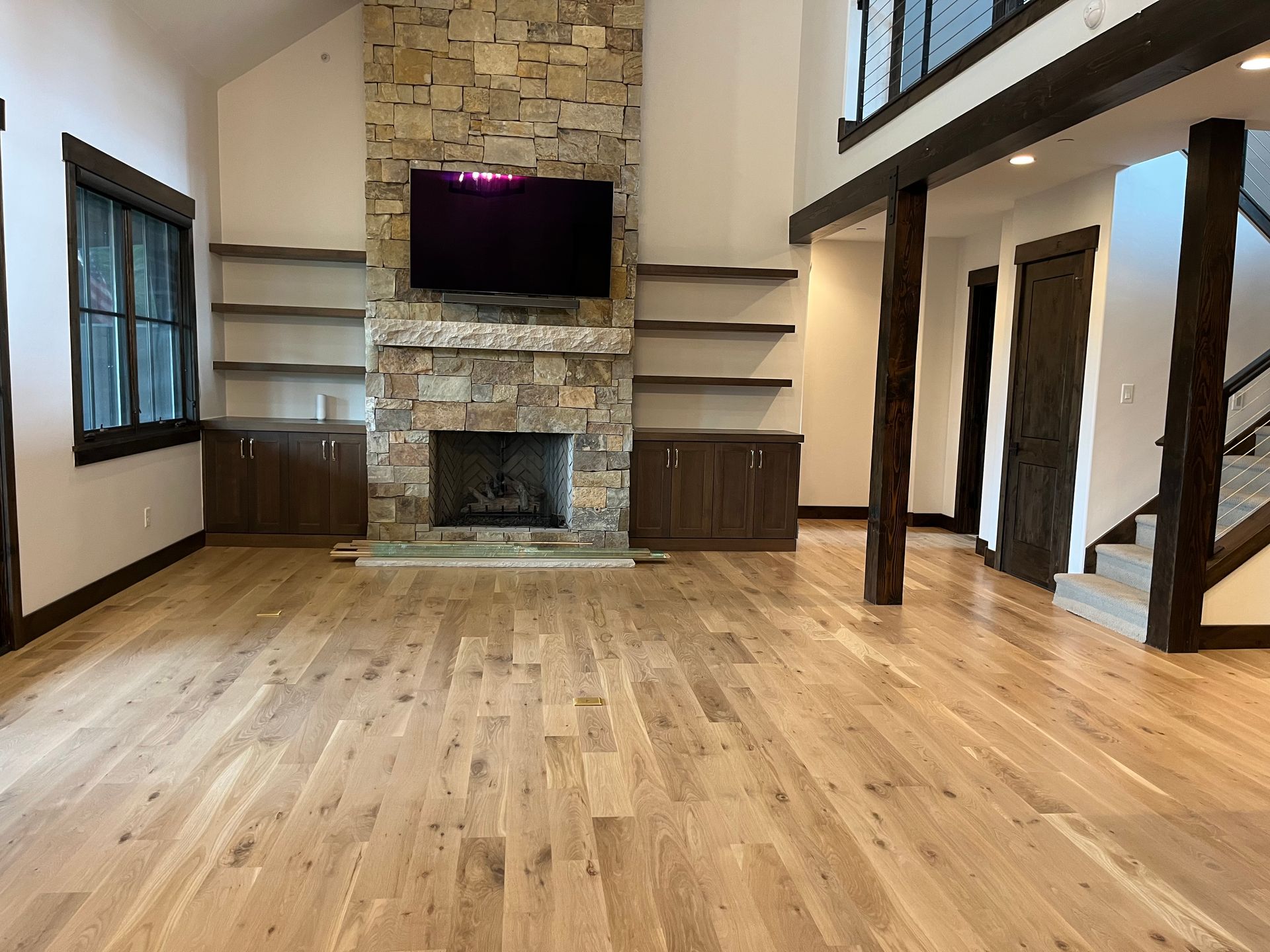
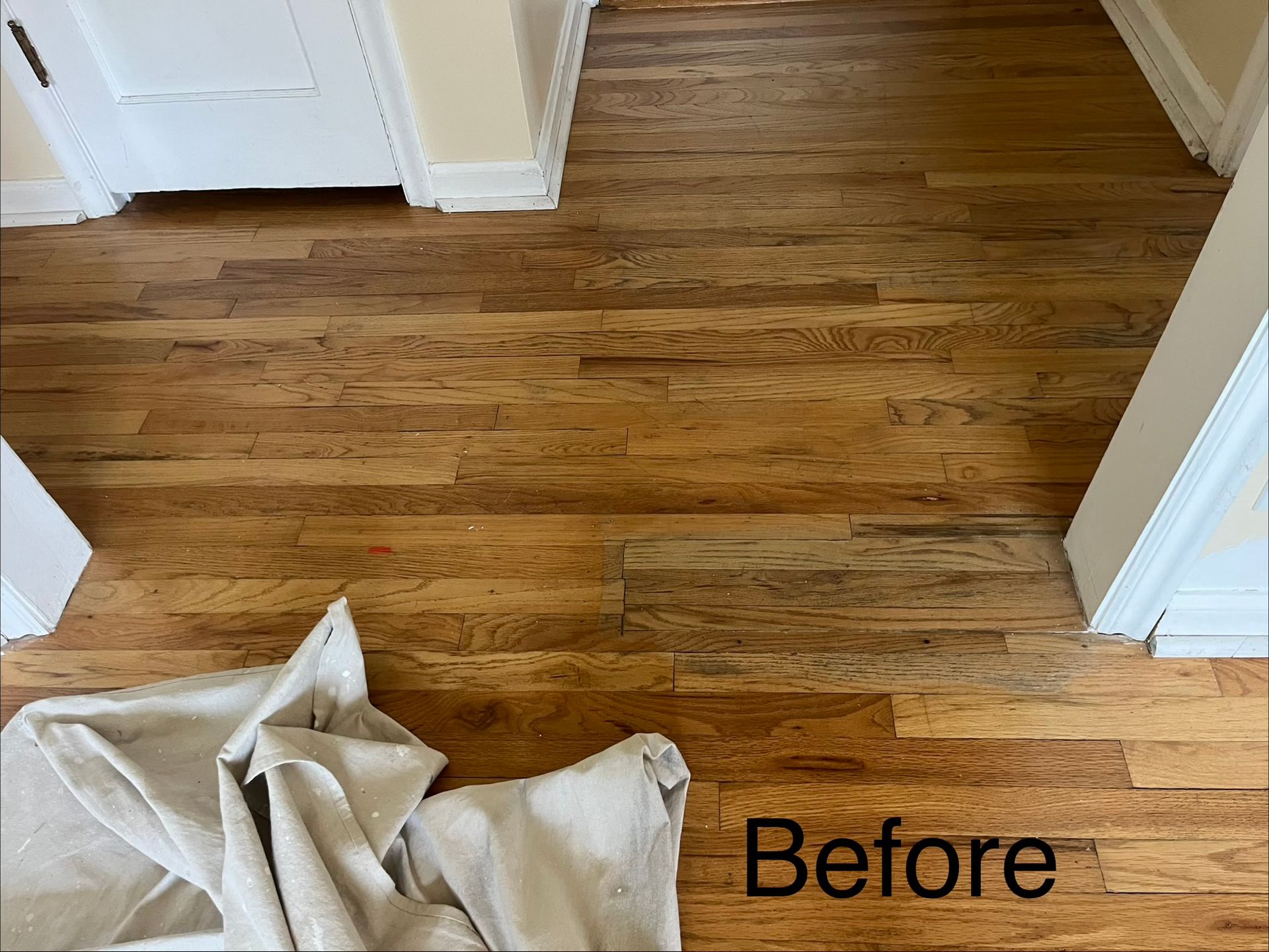
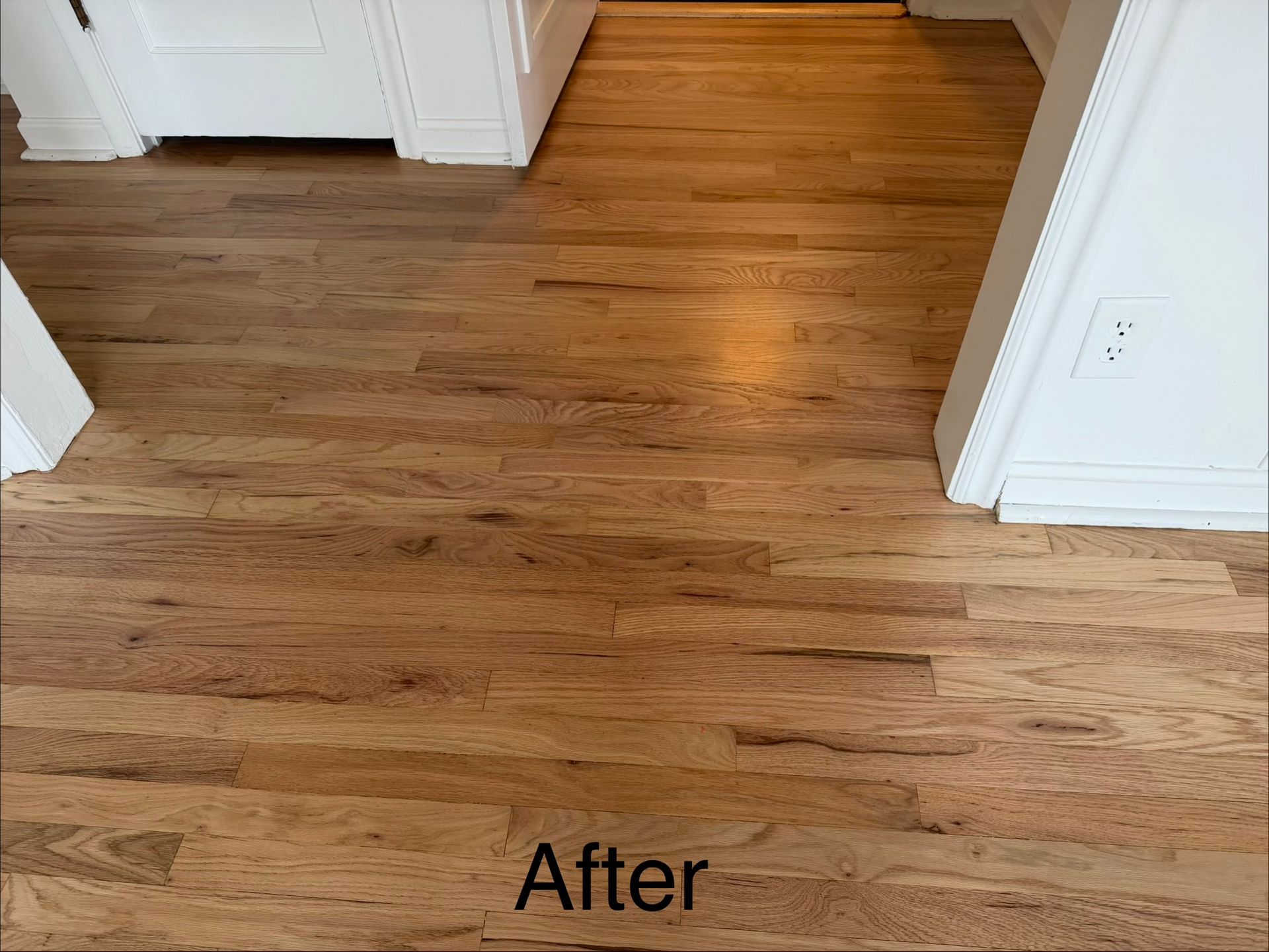
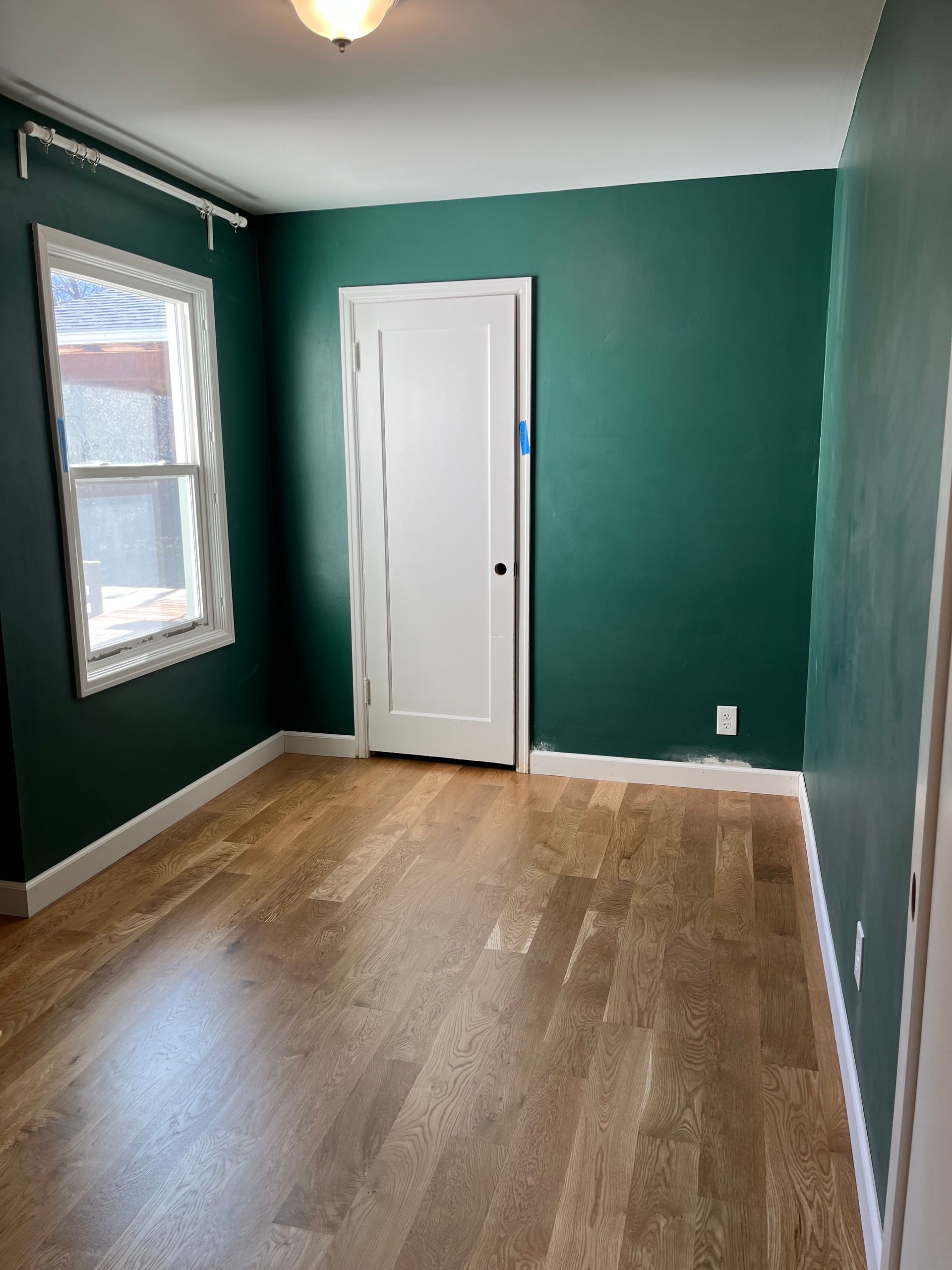
I just scanned a bunch of websites for 2025 design trends and looked at the flooring that was in each photo representing the trend.
We were very fortunate this past year to start working with a wonderful contractor who specializes in high-end remodels and new construction.
Rob, Matt, Will, Jose, Daniel, Armando and I thank everyone in the Salt Lake areas that have trusted us not only with their homes, but in transforming their lives.
New England Farmhouse Type Feel
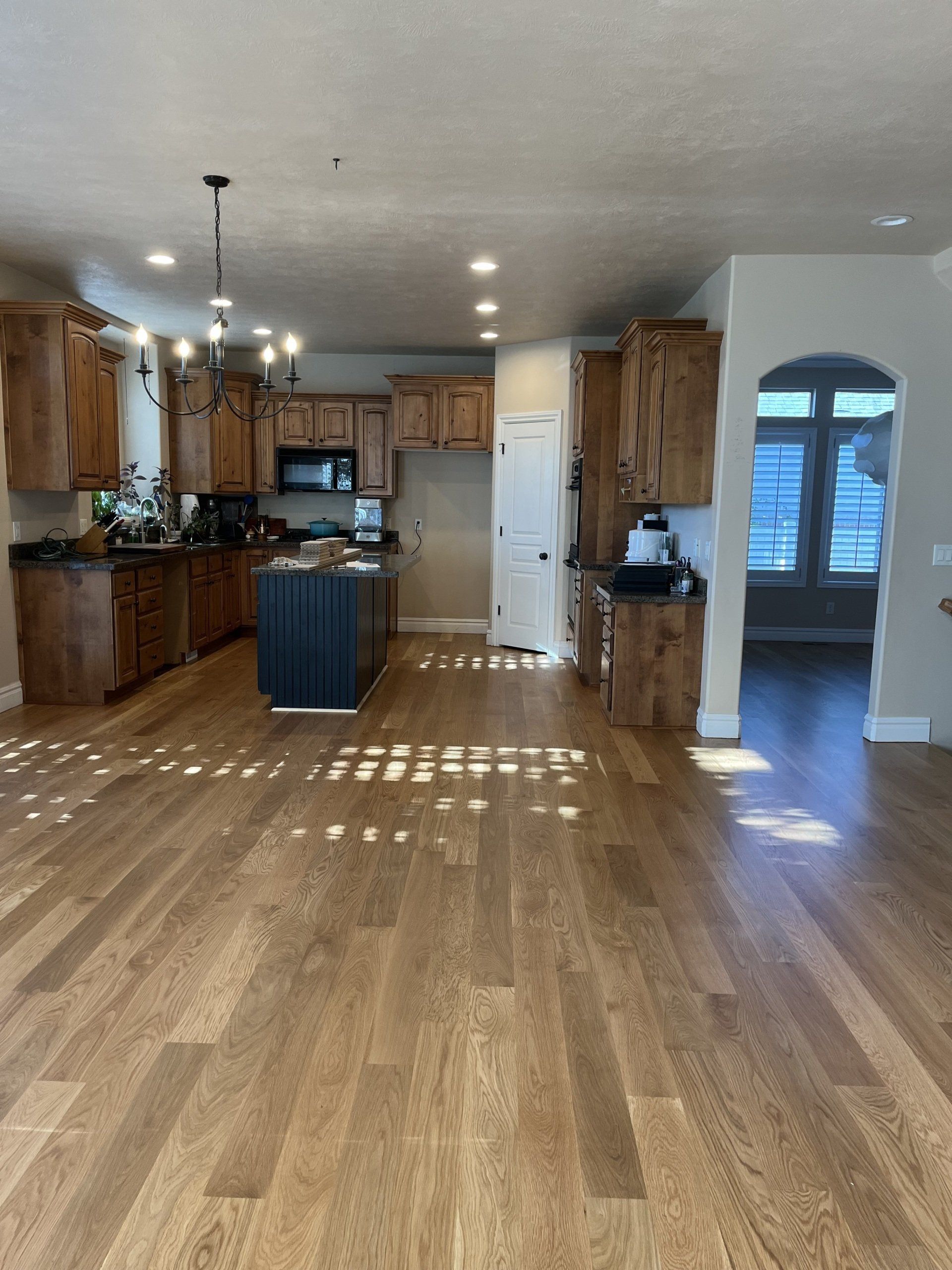
South Jordan Home
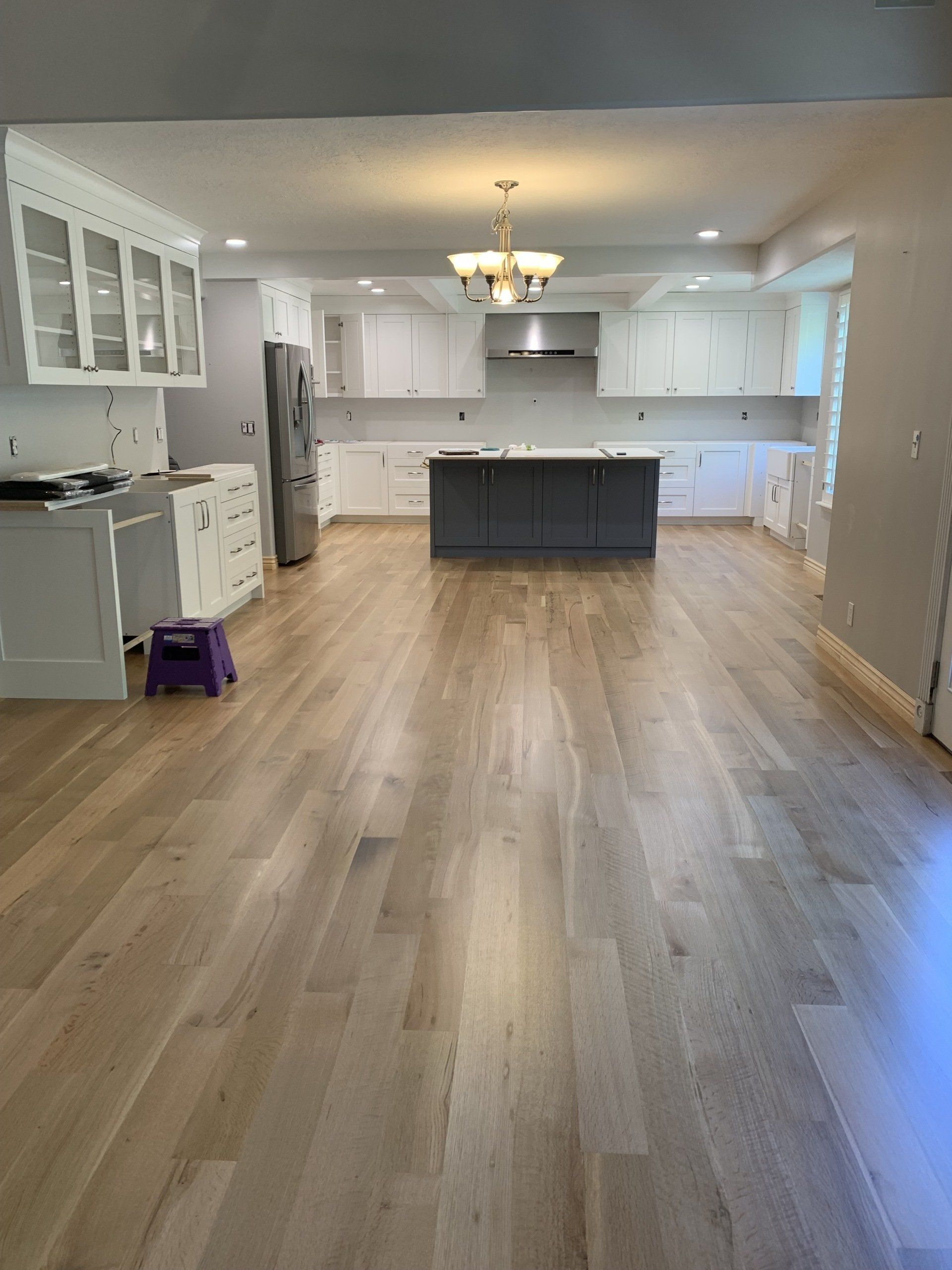
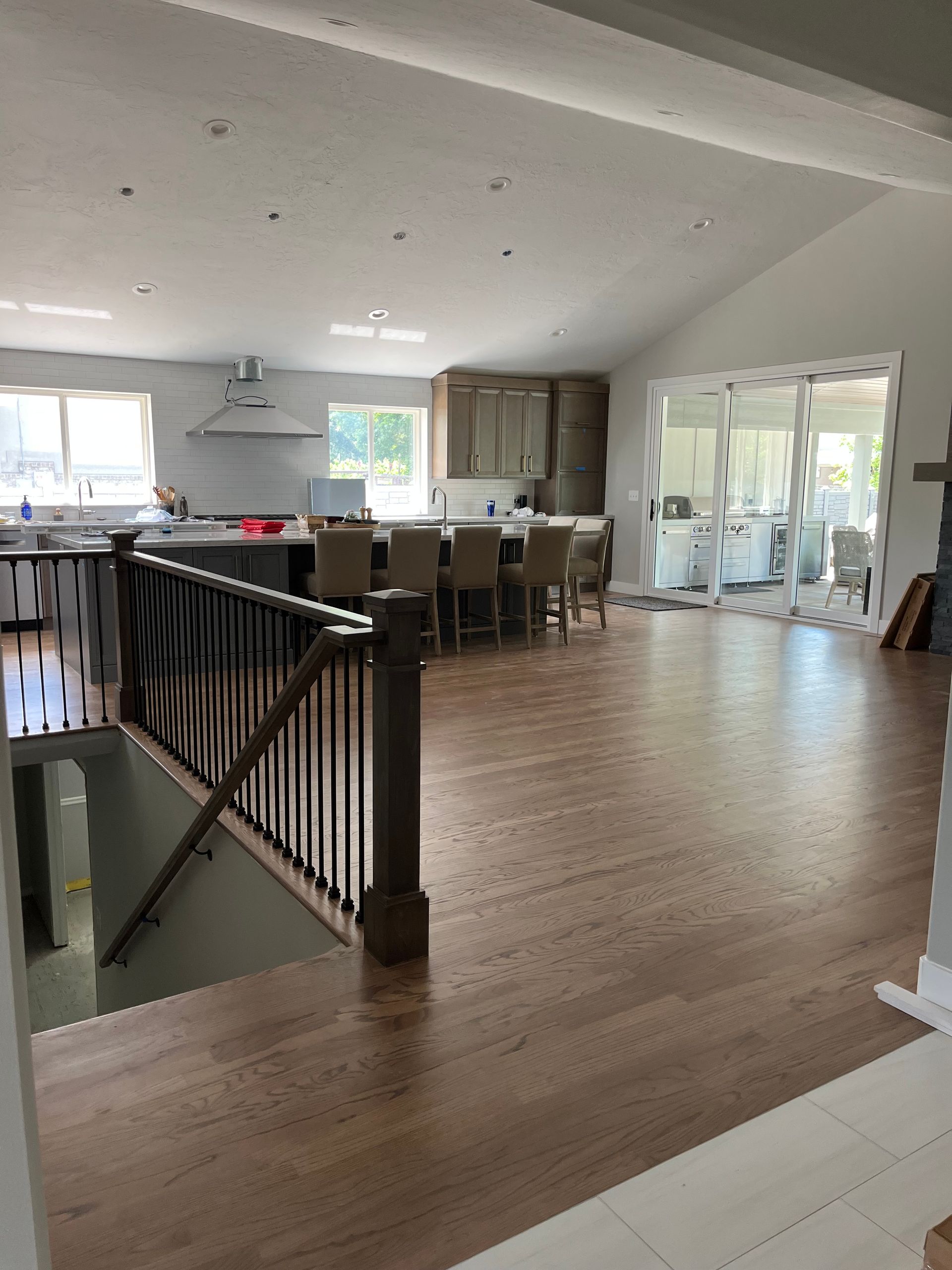
An extension to the back of the house to enlarge the kitchen required these Draper homeowners to work on the floors.
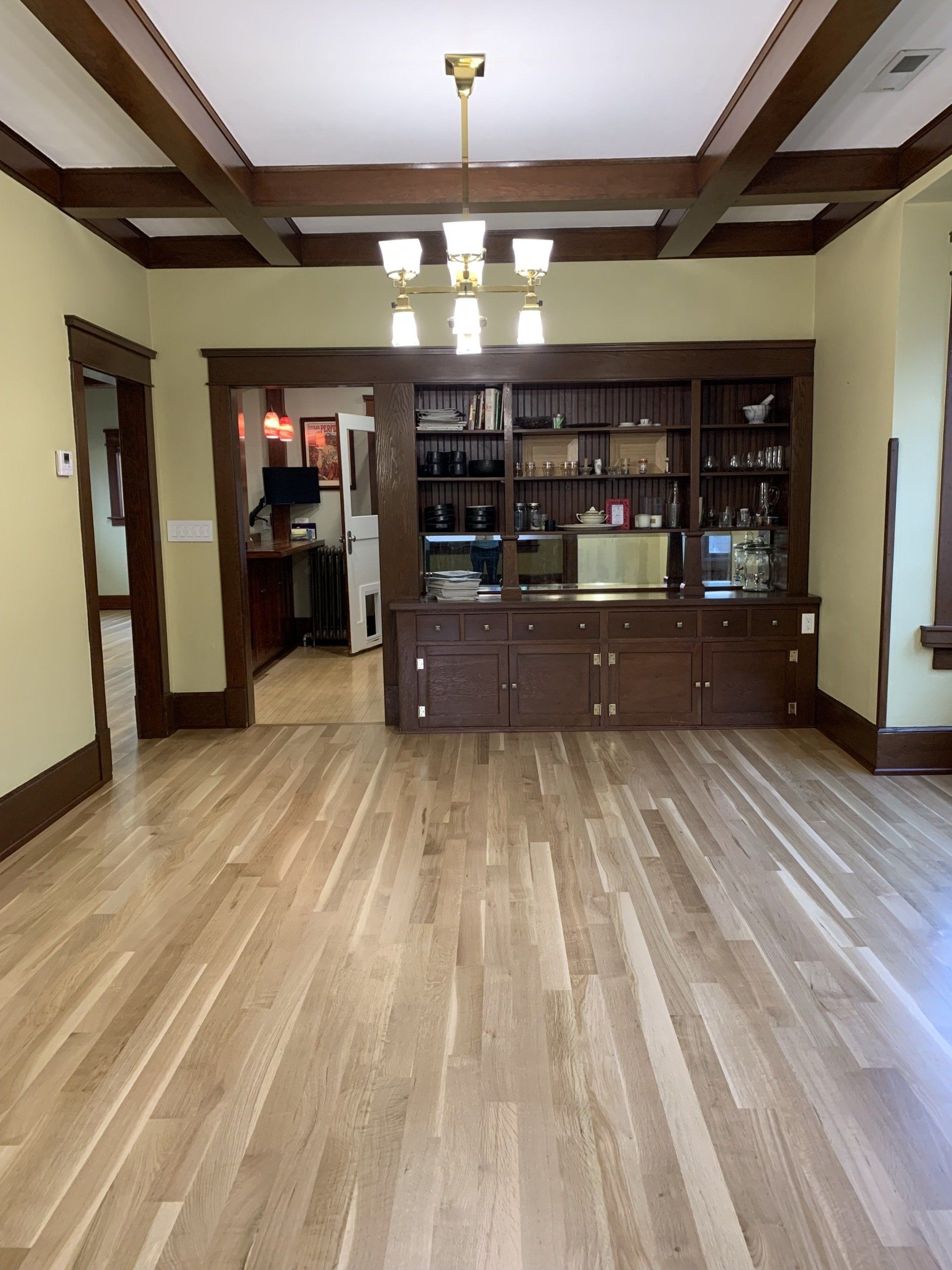
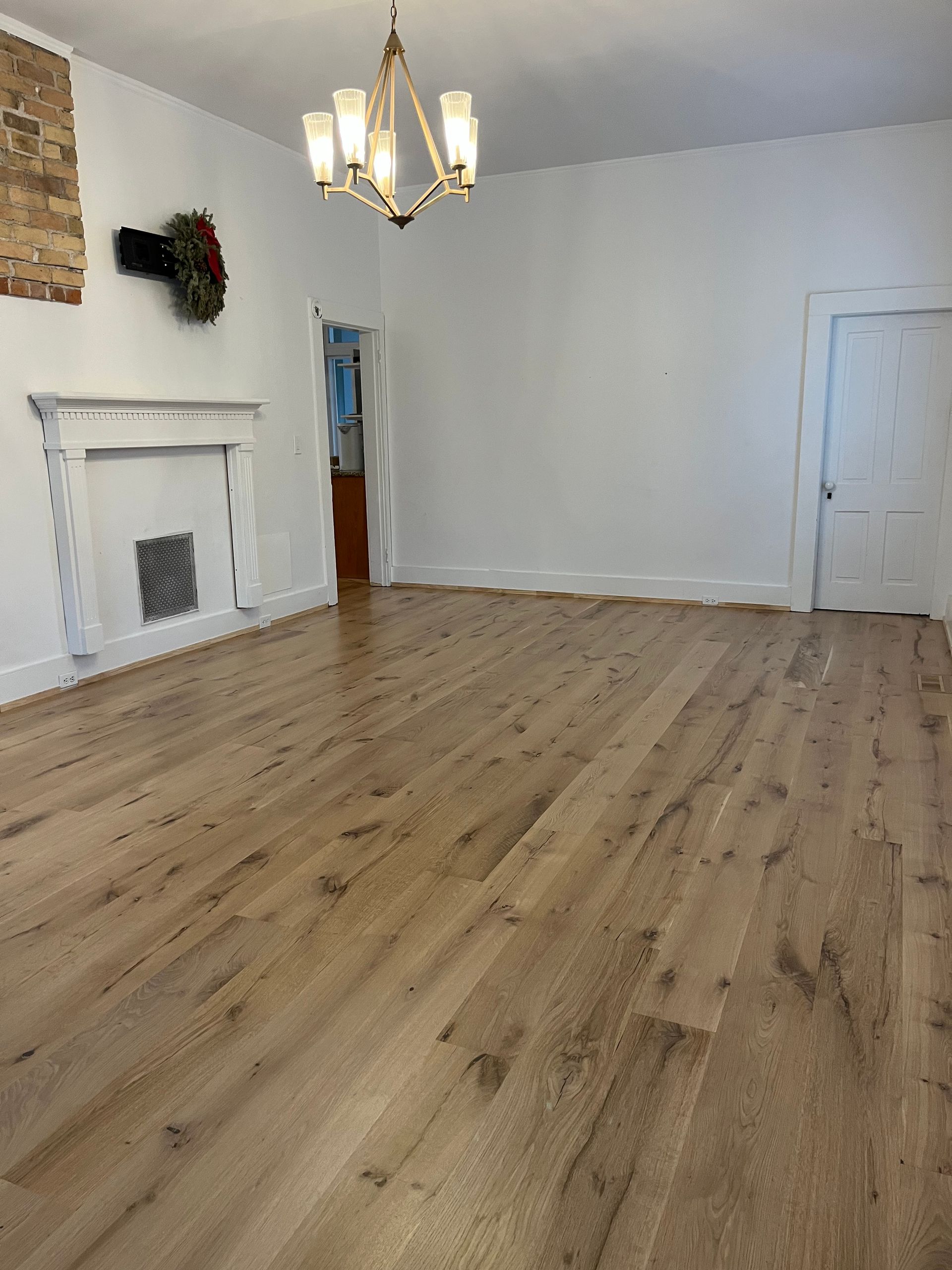
When homeowners buy an older house, oftentimes they do so because they like the "charm". The charm they are referring to are the original moldings or built-ins, but the "charm" they also get to live with are things like uneven subfloor - you know, the kind where the Christmas tree needs a major shim so it doesn't fall over?! We knew we had some subfloor issues to address in this older home in Sugarhouse, but when we stripped all of the old layers of flooring back to the original subfloor, what we found was the worst subfloor I have seen in the 16 years I have been doing hardwood floors. We know that houses settle over time, but we had 1 corner of subfloor that was over 2" below the bottom of the baseboards! Matt spent a week building up and leveling out the subfloor. Of course the rift and quarter sawn white oak floors turned out gorgeous, but I took it as an even better compliment when the homeowner said it was "strange walking on it without the movement". May your subfloors be flat and your Christmas trees stand straight - without assistance!
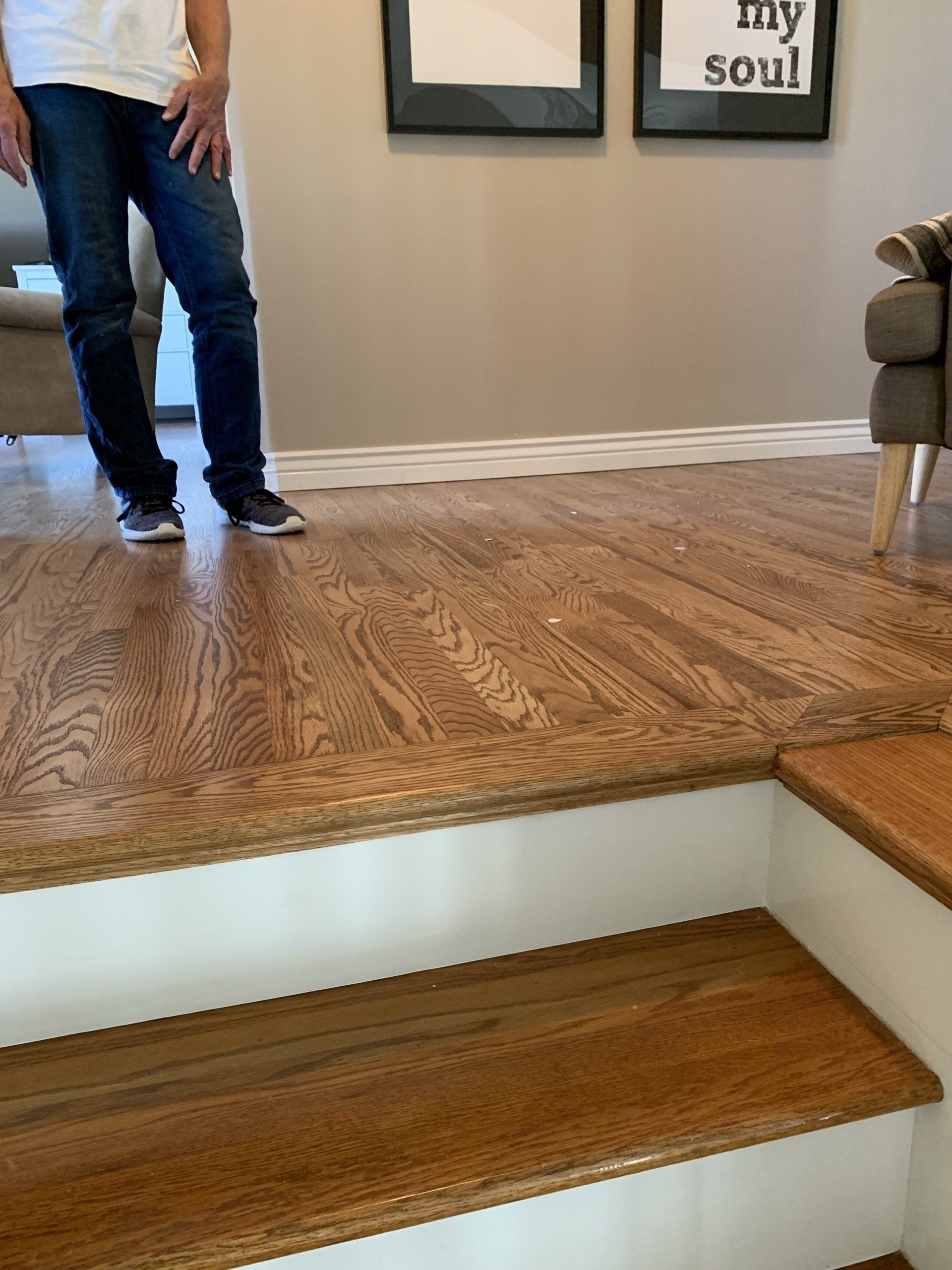
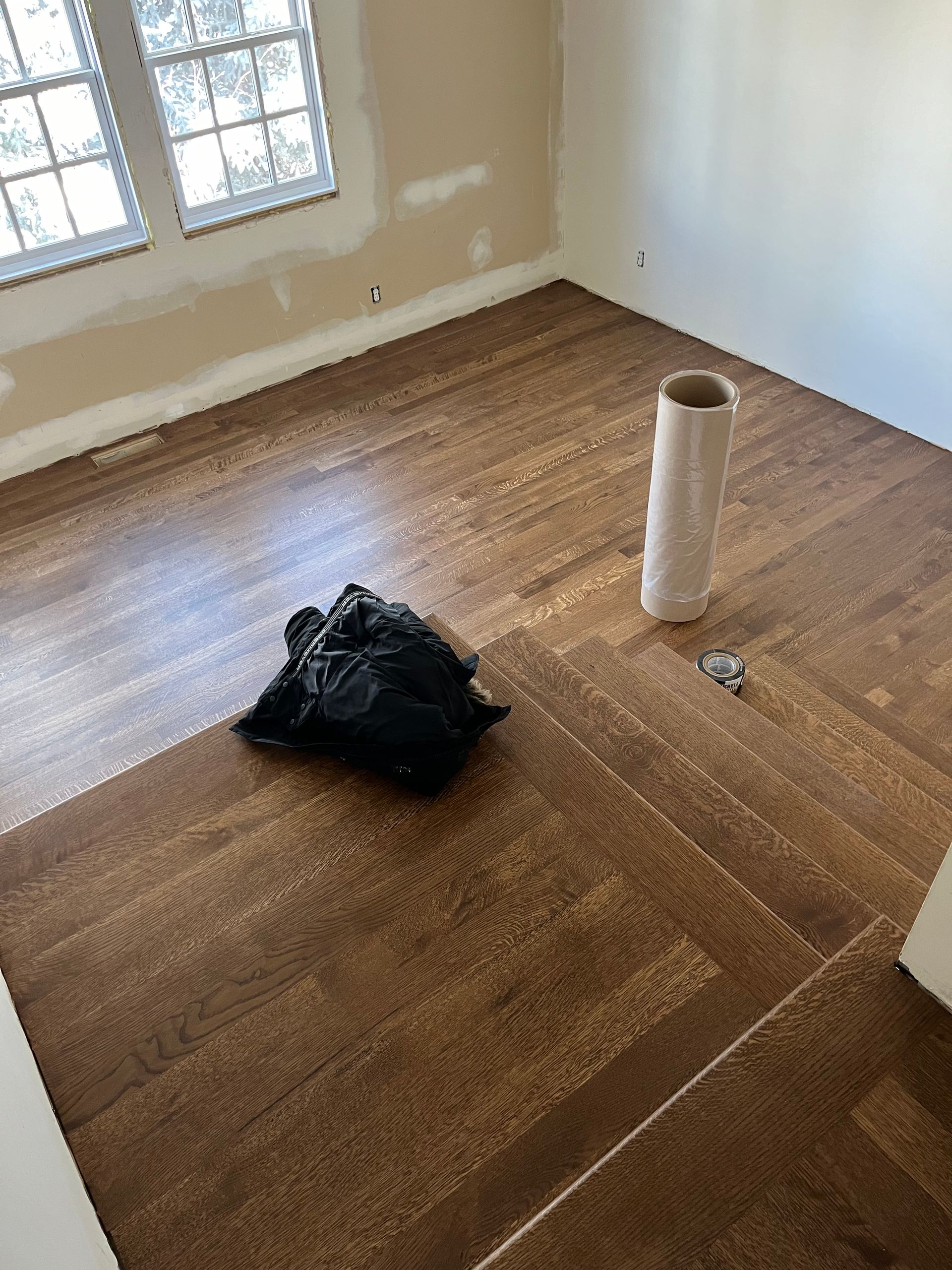
This year I have been trying to share the quirky things that come up on jobs, because almost every job has at least one unanticipated thing that requires a decision on how to handle the quirky item. At this home in Sandy, it was a surprise to find that the base plate under the spindles was not only not 3/4" thick, but it was a veneer. The staircase is really well built, so we anticipated butting the new 3/4" wood in the upstairs hall flush with the base plate and sanding everything to match. When we discovered that the base plate was thinner than our wood flooring and not able to be sanded, the homeowners and I literally sat on the floor and played around with flooring and nosing pieces to come up with a plan. We decided to bevel the edges of the wood flooring to ease the transition in height, and that the homeowner would paint the base plate white after we were finished with the floor. Jose did a great job executing the plan and the homeowners are happy with the outcome of the whole job, even if it does require a little more work on their end to get the base plate painted.
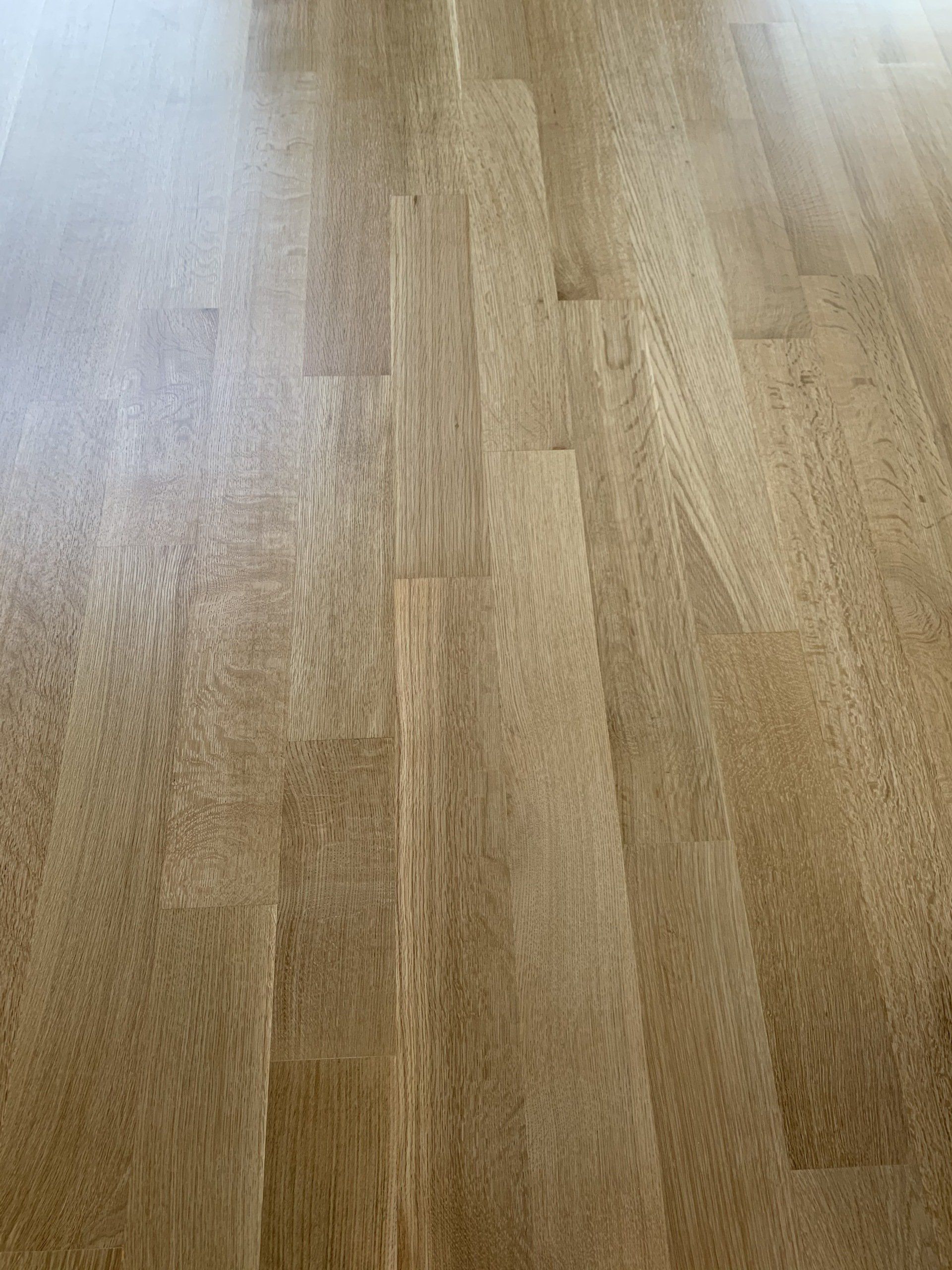
How to make all the different wood tones in our home look good together, including those we inherit with the home and those we bring in with our furniture, is a dilemma shared by many homeowners. This Park City homeowner's wood beams have taken on an orange tone, her brown baseboards have a slight green undertone in some areas from sun exposure, and she had her kitchen cabinets painted black several years ago. We decided that keeping the floor light and neutral, in color and grain pattern, would be best. She selected rift and quarter sawn white oak with a water-based sealer to keep the space bright without competing with the other wood tones. Beautiful home accomplished!
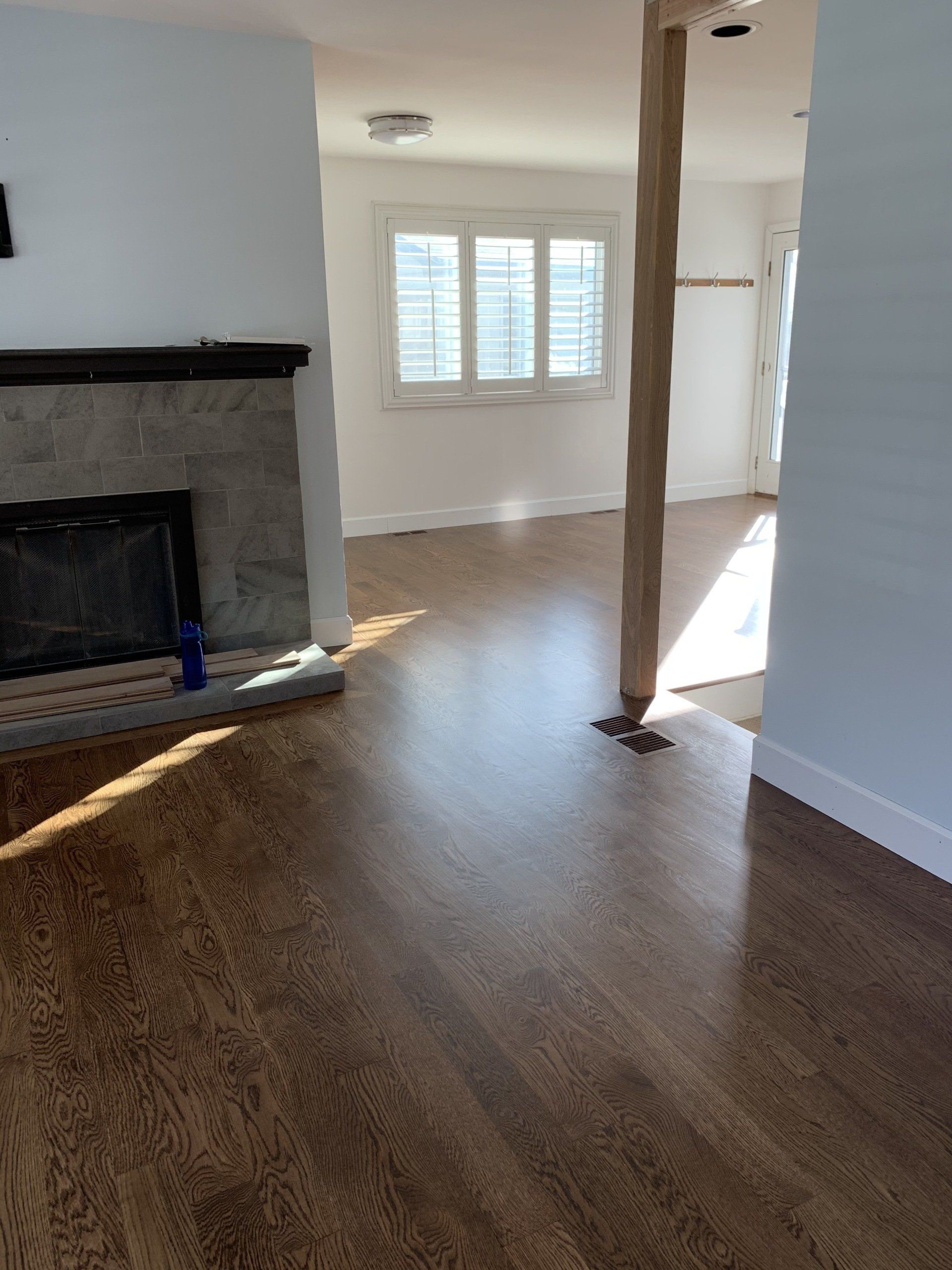
For a hardwood floor install, we don't need a level floor